
Minho is the Portuguese region to visit for anyone who likes to eat well and abundantly. People from Minho love food and enjoy sharing it even more. It is a cuisine that feels very familiar to us, as we are “almost Minho people,” and we will try to convey that love of food while exploring the region’s most iconic dishes.
The Minho is a region in northwest Portugal, located between the Minho River, which borders Galicia, and the Douro Litoral (mainly Porto District). In practice, it corresponds to the districts of Viana do Castelo and Braga. It is known as the greenest and rainiest region in Portugal.
Its cuisine is shaped by agriculture and livestock farming, with animals traditionally raised at home. The ingredients are simple, often homegrown, and nothing goes to waste. In the past, the pig slaughter was carried out at home and was a true festive occasion, using every part of the animal, including the blood.
There is a strong presence of vegetables such as collard greens, beans, and potatoes. Although there are fish dishes such as cod, sardines, and lamprey, most recipes are meat-based. As for sweets, the Minho is rich in conventual desserts, created in the region’s many convents and monasteries.
One thing is certain: you will not go hungry in the Minho. Come with us and discover what to eat in Minho!
1. Caldo Verde
Caldo verde is probably the most widely consumed and beloved dish in Minho. Besides being adored by Portuguese people, it is also internationally known, especially in the U.S., largely thanks to the influence of Portuguese emigrants.
It is a simple, easy-to-make, and deeply comforting soup. It is made with collard greens, a vegetable typical of northern Portugal and Galicia, potatoes, onion, and garlic, finished with olive oil. It is usually served with chouriço or salpicão, depending on the family.
Besides being from the Minho, it is one of the most traditional soups in Portugal, which means you can find it in restaurants all over the country. It is also an easy recipe to make at home; you can see the typical recipe we make here.

2. Papas de Sarrabulho
Sarrabulho refers to coagulated pig’s blood and is especially associated with Minho dishes and the traditional pig slaughter. Papas de sarrabulho are made with a mixture of beef, pork, and chicken, along with pieces of regueifa bread crumbed into the mixture. Once everything has been cooked, deboned, and shredded, boiled pig’s blood is added and crumbled in.
The dish is served hot in bowls of broth, sprinkled with ground cumin. It is a kind of starter or soup, but don’t be fooled: after eating one bowl, you will feel quite full.
This is a dish found throughout the Minho, but it is especially associated with Ponte de Lima. It is often served as a snack or at local festivals, almost like street food.

3. Rojões
Visting Minho and not eating rojões is almost impossible. This iconic Minho dish is made with pieces of pork and diced potatoes fried in lard.
The meat is marinated in garlic wine and paprika, then fried in pork lard together with the potatoes. Rojões are often served with tripa enfarinhada, liver, and belouras, as well as white rice or arroz de sarrabulho, which is made with pig’s blood. They are also often seasoned with cumin, so they can have a strong cumin flavor.
It is a comforting and filling dish, especially popular in winter. The best place to try it is Ponte de Lima, in the Minho. There are several specialist restaurants, such as Fátima Amorim or Casa Borges. It is also a dish that is quite easy to make at home.

4. Pica no chão de cabidela
Pica no chão de cabidela is a typical Minho dish, especially associated with Braga. It is made with home-raised chicken or rooster, which is where the name “pica no chão” comes from, referring to poultry that roams outdoors.
To make this rice dish, the chicken is slowly stewed for a long time until it becomes very tender and starts to fall apart. Then the rice is added, and finally the special ingredient: the chicken’s blood mixed with a little vinegar, so it does not coagulate. The rice should be loose and soupy, and it is served with parsley on top. It is also an ideal dish for winter.
To try a good pica no chão rice dish, we recommend the restaurants Arafate and A Camponesa.

5. Posta de Vitela
We have tasted so many veal steaks in Portugal and abroad, and our favorites are the ones from the Peneda-Gerês area in the Minho. In this region, you will find two meats with Protected Designation of Origin (PDO): Barrosã beef and Cachena da Peneda beef. Both come from native breeds, raised almost semi-free in the mountains of Peneda-Gerês National Park. It is delicious meat of exceptional quality, tender and juicy.
That is why trying a grilled veal steak is a must, preferably served with smashed roasted potatoes and plenty of olive oil. It is divine.
There are several excellent restaurants where you can enjoy a great steak, so we suggest checking our article “Where to eat in Geres,” where you will find several delicious options.

6. Duck rice
Braga-style duck rice is one of our favorite Minho dishes. It is made with shredded duck, chouriço, ham, and rice. In more traditional recipes, it also includes pork ear, while more modern versions are topped with melted cheese. The rice is cooked in the duck broth and then layered with the shredded duck, finishing with chouriço and cheese.
This is a traditional dish from Braga, once prepared in seminaries. It has references dating back to 1812, when it was known as “seminary duck rice,” according to Cozinha do Minho by Alfredo Saramago. At the time, it was made with wild duck.
Today, it can be found throughout Portugal, but it is especially associated with Braga, where it is even served as a daily special in some restaurants. We recommend Rola Este and Tasquinha do Fujacal.
7. Roasted kid goat, Minho style
Roasted kid goat is a traditional dish from several areas of the Minho, such as Monção, Castro Laboreiro, Serra d’Arga, and Arga de Cima, in short, mountain regions linked to sheep and goat herding.
The kid goat should marinate in a garlic-and-wine marinade for about 24 hours. It is then slowly roasted in the oven, traditionally wood-fired, for several hours, with the potatoes added halfway through the process. It is usually served with white rice. The meat becomes tender and almost falls apart, generously coated in the sauce, and, together with the potatoes and rice, it is truly delicious.
This is a typical dish for special occasions such as Easter, Christmas, and important family gatherings. There are some restaurants in the Minho, including in Peneda-Gerês National Park, that serve it, but in many cases it is necessary to order it in advance.

8. Fafe-style roasted veal
Roasted veal is a typical Minho dish, especially in Fafe, where it was perfected and developed its own identity. There is even a Confraria da Vitela Assada à Moda de Fafe, a brotherhood dedicated to this dish.
The veal is slowly roasted in the oven, preferably wood-fired, and served with potatoes that roast alongside the meat. It comes with white rice, often served in a clay dish. The meat is juicy and golden, served with the roasting juices. It is a truly memorable dish.
Our favorite place to eat roasted veal is the Porinhos restaurant, located very close to the city of Fafe. The meat is of excellent quality and very well prepared; it is one of those places you want to return to again and again.

9. Bacalhau à Narcisa
Bacalhau à Narcisa, also known as bacalhau à Braga or bacalhau à Minhota, was created by the cook Eusébia at the Narcisa restaurant in Braga.
The cod is fried in plenty of olive oil, along with the onion and garlic. It is served with sliced fried potatoes, covered with the onion mixture, and drizzled with olive oil. It is a delicious dish, very moist, and with a strong olive oil flavor.
The best place to try this dish is Braga. The original Narcisa restaurant no longer exists, but several restaurants in the city still serve this specialty. In fact, some people go to Braga especially just to eat bacalhau à Narcisa.

10. Lamprey Bordelaise style
Lamprey is not a universally loved dish, but those who enjoy it, do it with great enthusiasm. It is a delicacy that is becoming harder and harder to find, and the prices are outrageous. Even so, it is worth trying this Minho dish at least once.
Its origin goes back to the Bordeaux region in France, but it was adapted to the ingredients and traditions of the Minho. It is a seasonal dish, available between January and April.
The lamprey is marinated in red Vinho Verde and stewed with onion and garlic. It is traditionally served over toasted bread, generously covered with the sauce, and accompanied by rice. Another very famous lamprey dish is lamprey rice.
One of the best places to eat lamprey is Casa Lara in Monção.

11. Viana tart (Torta de Viana)
The Viana tart is one of the most iconic sweets in the Minho. It is a soft, moist cake filled with delicious egg yolk cream. This conventual sweet dates back to 1505 and originated at the Convent of Santa Ana in Viana do Castelo.
The tart is made with a light sponge cake dough, filled with a cream of sweet egg yolks, and carefully rolled up. It is finished with a dusting of sugar or powdered sugar. It is absolutely delicious, especially for anyone who loves egg yolk desserts.
One of the best places to try the Viana tart is at Zé Natário pastry shop, one of the certified establishments for producing and selling this traditional specialty.

12. Disk cake (Bolo de discos)
Disk cake is a traditional sweet from Arcos de Valdevez, in the Alto Minho. It is made of layers of batter based on egg whites and almond flour, alternating with egg yolk cream, and finished with powdered sugar and cinnamon.
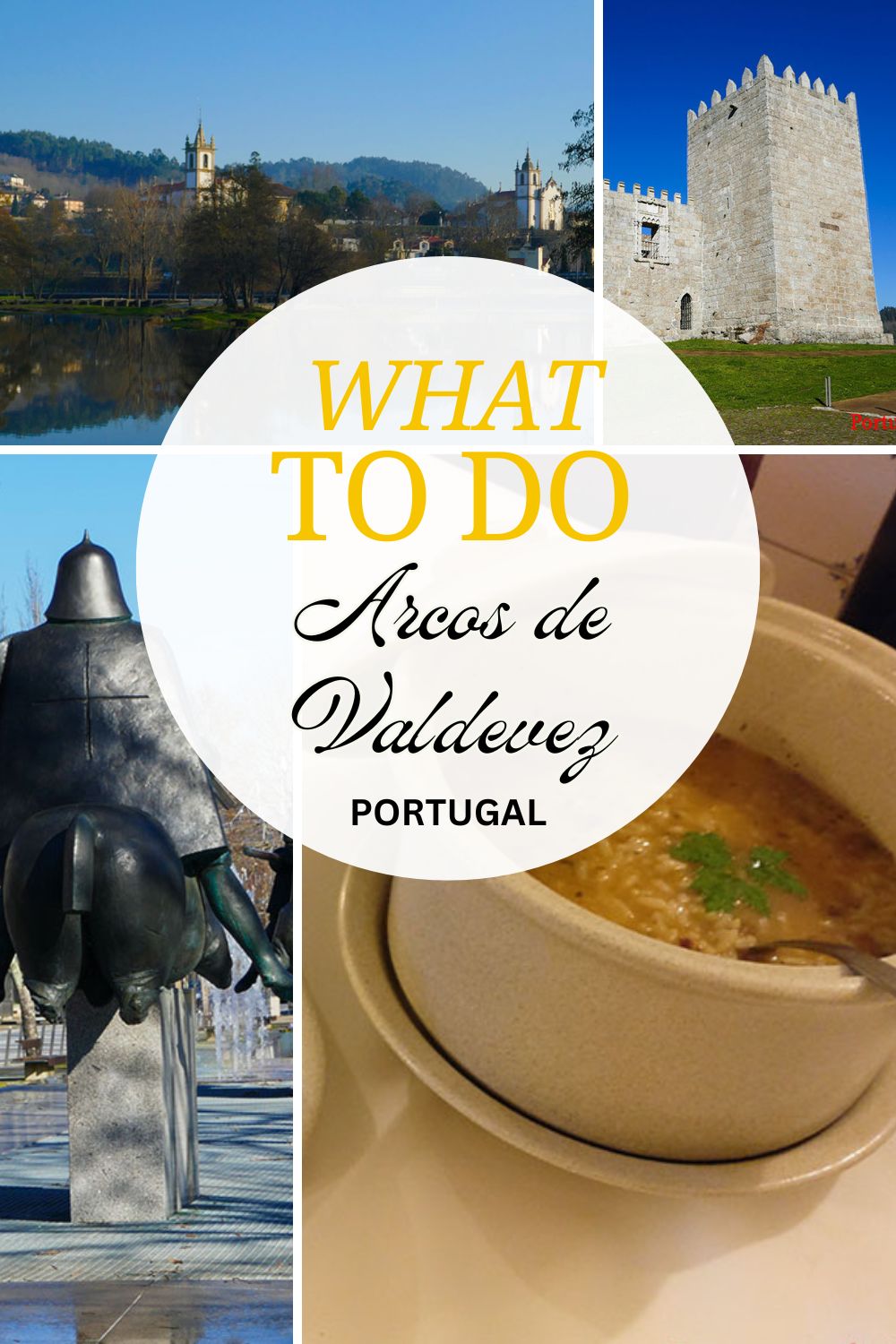
It is a wonderful dessert: light, yet at the same time intense, thanks to the rich flavor of the egg yolk cream. If you like sweet eggs, this cake is for you.
We had the chance to try it as dessert at the Mó restaurant in Parada, and we loved it. However, it is also served in other places, including Pastelaria Doces RM in Arcos de Valdevez, run by D. Rosa Maria, who has done excellent work promoting this traditional Minho sweet.

13. Pudim Abade de Priscos
The Abade de Priscos pudding is a Minho sweet created in Braga by Abbot Manuel Joaquim Rebelo, a parish priest of Priscos, on the outskirts of Braga, in the 19th century. It is a truly sinful dessert, with a special ingredient.
It is a rich egg-yolk pudding whose distinctive ingredient is pork lard. Don’t worry: the flavor is not noticeable. The result is an extremely silky, sweet, and delicate pudding that melts in the mouth.
The best place to try the Abade de Priscos pudding is, naturally, Braga. Several restaurants include it on their dessert menus, as well as some pastry shops in the city center where it can also be found.

14. Formigos or Mexidos
There are countless recipes for formigos, and each family has its own, but basically, it’s a sweet treat made with breadcrumbs, dried fruit, and a sweet syrup. It’s a traditional Minho Christmas specialty, also known as mexidos.
It generally includes lemon zest, cinnamon, eggs, honey, port wine, a variety of dried fruits, and crumbled stale bread. Since it doesn’t require much precision, each person ends up making it their own way, adjusting the ingredients to their taste.
It’s a typically homemade recipe, uncommon as a dessert in restaurants, and consumed almost exclusively during the Christmas season.

15. Vinho Verde (Green Wine)
One of the emblematic products of the Minho region is Vinho Verde, a category of wine produced exclusively in northwestern Portugal, especially in the Minho region.
It is a wine characterized by its fruity, floral, and fresh aromas, with low alcohol content and high acidity. Despite the name, Vinho Verde can be white, red, or rosé. The grapes are not harvested green or before ripening; they are harvested at the ideal point, just like other types of wine.
Some of the best-known Vinho Verde wines are Aveleda, Casal Garcia, and Gazela. However, most restaurants in Minho serve Vinho Verde, often house wine, produced by small local producers or cooperatives.
